
Bench Warrants in Marion County
“Bench warrant” is common language for court-issued arrest process tied to nonappearance or noncompliance. In Marion County, possible triggers include a missed initial appearance, arraignment, or sentencing; failure to comply with a court order; and a failure-to-appear event in a traffic or citation case. The precise trigger comes from the docket. Not every missed payment automatically produces a bench warrant.
Iowa officials may instead use “arrest warrant for failure to appear” or a form-specific term. Iowa does not provide a statewide public capias-pro-fine portal. Ask the Clerk of Court for the exact label, current status, and next required act. A failure-to-appear entry alone cannot establish that an executable warrant remains open.
Marion Bench Warrant Docket Terms
Several terms can appear near the same event but mean different things. A failure to appear states that a required act was missed. A warrant is the court’s arrest command. Recall means the court withdrew the process. Quash means the court set it aside. Service or return records what law enforcement did. The status must be read as a sequence, not from one isolated line.
- FTA
- Failure to appear for a required court setting or directed step.
- Recall
- Court action withdrawing a warrant.
- Quash
- Court action setting aside warrant process.
- Return
- An officer or court record of execution or other handling.
- Bond
- A court-authorized financial or release condition, not a fixed warrant price.
Keep the full case number and dates when calling. The Clerk can distinguish an old event from the current court order.
How a Bench Warrant Is Issued
The judge or magistrate reviews the case after a required court act is missed. If arrest process is authorized, the document and docket tie the command to the county, court, case, offense or underlying matter, issue date, and judicial authority. Iowa magistrates sit within the Iowa District Court rather than a separate municipal-court system. Their statutory work includes simple misdemeanors, traffic and ordinance matters, preliminary proceedings, warrants, arrest orders, and bail.
After issuance, law enforcement may receive the process through criminal-justice channels. The Iowa DPS IOWA System connects authorized agencies but is not open to public searches. A warrant can remain enforceable until service or court action changes it. The public should use Iowa Courts Online as a case lead, then ask the Marion County Clerk whether later entries altered the process.
Form 7 and Marion Bench Warrants
Iowa Rule 2.36 Form 7 is the closest official failure-to-appear form reviewed. It addresses an arrest warrant when a defendant fails to appear for sentencing. The blank form includes the state, county, criminal case number, conviction date, offense and statute, command to arrest and bring the defendant before court, date, and signature. It is a document-literacy aid, not a universal form for every bench warrant.
Form 6 covers an arrest warrant after indictment or information. Search-warrant forms concern a search for specified evidence or property. They are different instruments. A paper notice should be checked for county, court, case number, offense, command, issue date, signature, bail endorsement, and any return or recall information. Do not discard or ignore it because its heading differs from the phrase “bench warrant.”
Bench Warrant vs Arrest Warrant
Both instruments authorize arrest, but their procedural paths differ. A bench warrant commonly grows from an existing case and a missed duty. An arrest warrant commonly follows a probable-cause showing concerning an offense. A judge or magistrate issues each under the applicable rules. The difference matters because the issuing court may require a new setting or motion in a bench matter, while an arrest warrant may move directly to custody, initial appearance, and bond review.
| Feature | Bench Warrant | Arrest Warrant |
|---|---|---|
| Trigger | Missed appearance or court noncompliance | Probable cause tied to an offense |
| Issuer | Judge or magistrate in the case | Judge or magistrate after the required showing |
| Case Context | Usually an existing filed matter | Criminal complaint, indictment, or information process |
| Next Steps | Appearance, reset, motion, recall, quash, or surrender as ordered | Custody or surrender, initial appearance, bond, and continued case |
Marion Bench Warrant Bond Limits
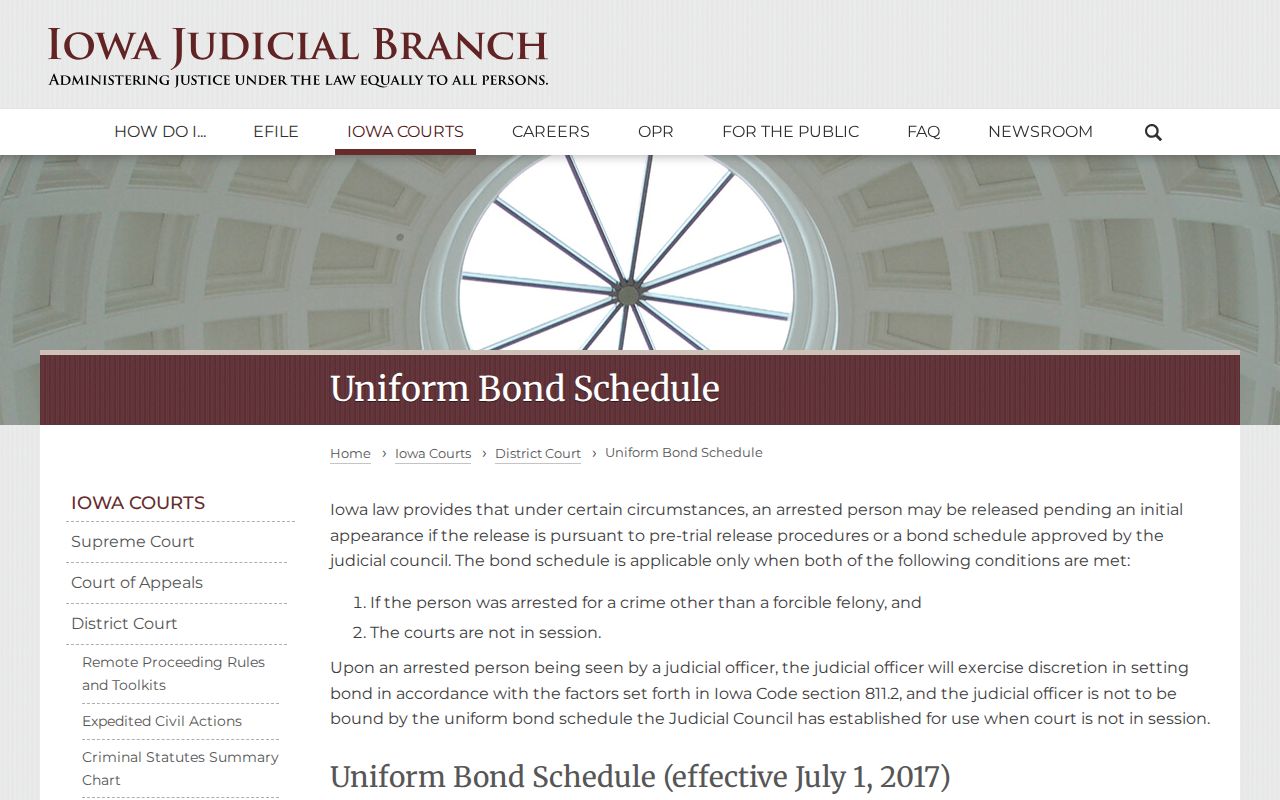
Bond is not a standard price attached to every Marion County bench warrant. A warrant or docket may carry an endorsement, but the court controls release conditions. The statewide uniform bond schedule applies only in the circumstances it describes, and listed offenses or case conditions may require review by a judicial officer. An online chart cannot quote a person’s actual bond.
The Iowa Uniform Bond Schedule shows categories and exceptions.
Ask the Clerk or authorized jail office whether bond applies, who may accept it, the approved method, and what appearance follows. Keep the receipt and release conditions.
How to Resolve a Marion County Bench Warrant
The issuing court must control the remedy. No Marion County walk-in surrender sheet, local recall form, amnesty event, online bond portal, or guaranteed walk-through procedure was found. A phone call does not automatically remove the warrant. Begin with the case and ask what the court requires before paying, appearing, or going to a law-enforcement building.
- Find the case and call the Marion County Clerk at 641-828-2207 to confirm the current entry and issuing court.
- Ask whether the case requires a new date, payment plan, appearance, attorney motion, recall, quash, or surrender.
- Consult a licensed Iowa attorney about a motion or arranged appearance when legal advice is needed.
- If surrender is required, call sheriff dispatch at 641-828-2220 before visiting 211 N Godfrey Lane.
- Ask about bond, accepted payment, and the next court date, then keep written confirmation.
Caution: Do not ignore possible bench process; it can lead to arrest during later law-enforcement contact while the court case remains unresolved.
Missed Marion County Court
If a Marion County court date was missed, do not assume that payment alone fixes the matter. Locate the case by full case or citation number. Ask the Clerk, “What is the current status of this case, and does the court require an appearance, payment, motion, or other action?” Ask whether counsel can arrange a setting and whether arrest process has been recalled, served, or remains active.
The official case and citation search can locate the file, but online information is not the official record. Fine payment may operate as a guilty plea unless an appearance is required. Payment, bond, recall, and appearance are separate acts. Keep confirmation of each action and the next date.
Which Marion County Court Issued It
The Iowa District Court, Judicial District 5, Marion County is the trial-court route for local felony, misdemeanor, traffic, and magistrate-filed matters. Magistrates work within that district court. They hear simple misdemeanors, traffic, city and county ordinance violations, municipal and county infractions, preliminary proceedings, and other assigned matters. No separate public Marion County municipal court or city warrant portal was identified.
The Clerk of Court is at 214 E Main Street, Knoxville, Iowa 50138. The phone is 641-828-2207 and the email is countyclerk.marion@iowacourts.gov. A city office may retain a citation or code record, yet a court-connected warrant matter can route through the district court and magistrate. The sheriff serves or routes process but cannot replace the court’s recall order.
Marion Bench Warrant Access Rules
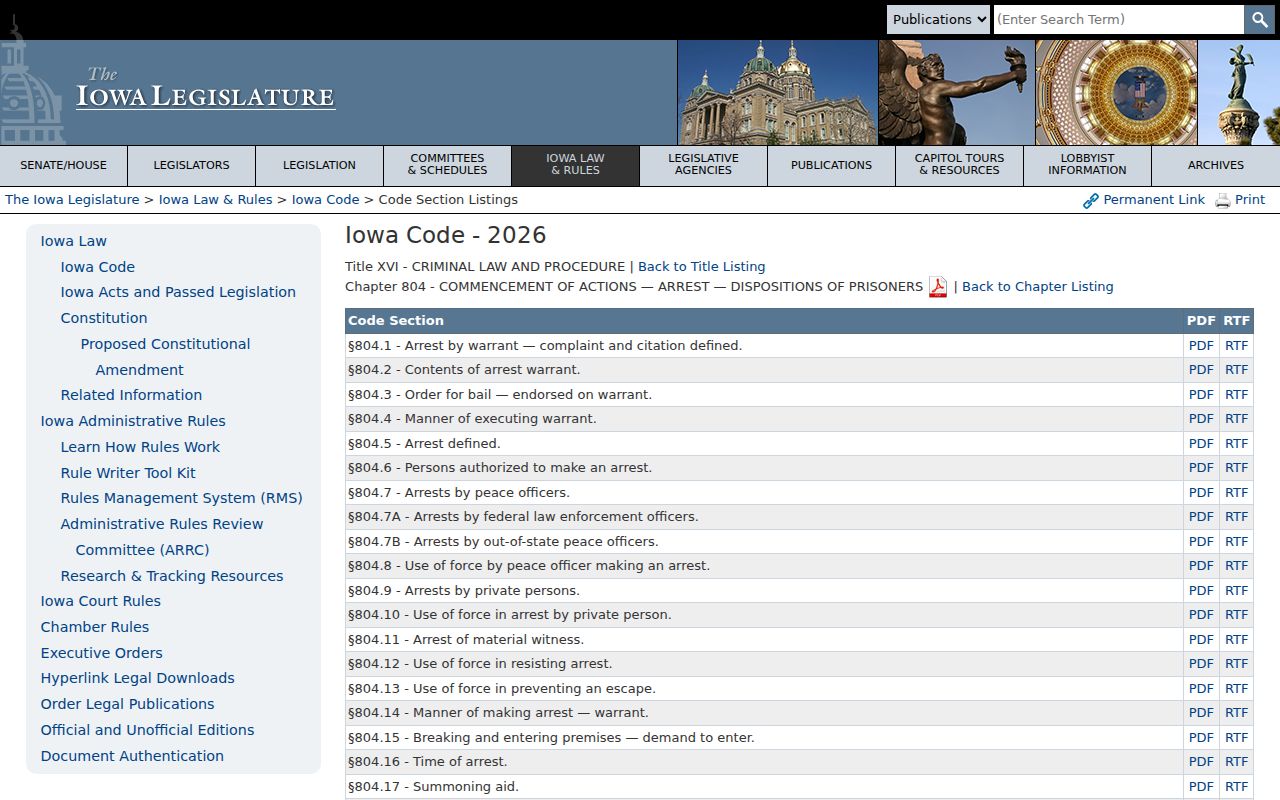
Iowa Code Chapter 804 governs arrest warrants, contents, execution, initial appearance, bond, officer returns, and confidentiality. Section 804.29 can seal information filed to secure an arrest warrant until arrest and return or initial appearance. Iowa Code Chapter 22 permits requests for existing public agency records but does not compel release of sealed material. Juvenile and other protected information also stays outside ordinary public access.
The official Chapter 804 page shows these warrant topics.
A missing field or denied request does not prove there is no warrant. Ask for the nonconfidential docket or document and request the legal basis for any withholding when appropriate.