
Arrest Warrants in Marion County
An arrest warrant tells peace officers to take someone into custody. In Marion County, the criminal case begins with a complaint, information, indictment, or another authorized filing. Sworn facts back the request. A judge or Iowa magistrate then weighs whether probable cause exists. That decision belongs to the court alone, not the sheriff or any web portal. Iowa Code Chapter 804 spells out how arrest by warrant works, covering contents, execution, initial appearance, officer returns, and confidentiality. The local trial court is the Iowa District Court, Judicial District 5, Marion County, and its magistrates are judicial officers in that same structure. A Marion County arrest warrant authorizes custody. It is not a search warrant for evidence. Nor is it a summons directing a voluntary appearance.
Marion County Form 6 Limits
The official Iowa Courts Online source shows the blank opening search choices.
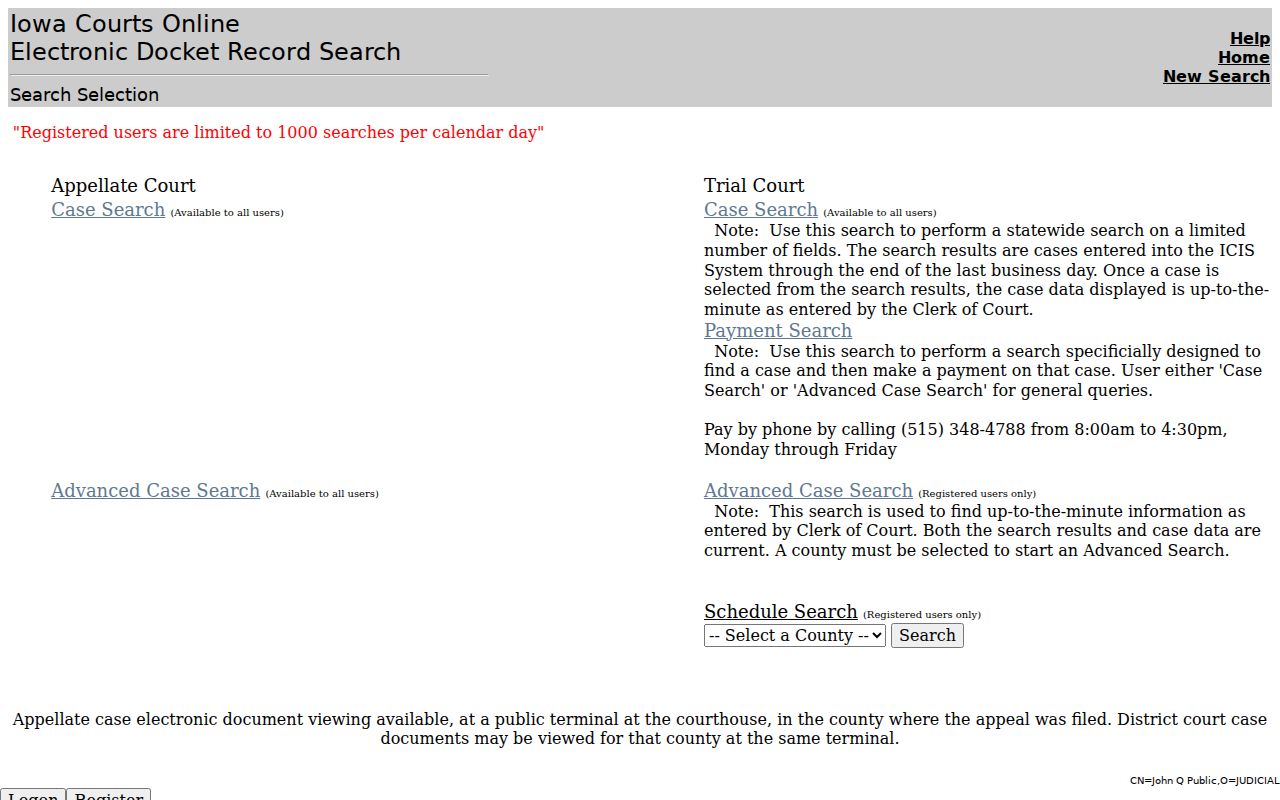
Iowa Rule of Criminal Procedure Form 6 is the official blank arrest-warrant form used after an indictment or information. It is only a template. It lays out the kind of court and case fields a real warrant can carry while protecting private case data. Reading one starts with the county and case number. From there, note the offense and statute, the command to peace officers, the issue date, and the signature. A Marion County warrant follows the same layout. A bail endorsement may appear when it applies. Service, return, recall, and later appearance details usually live elsewhere in the docket. No blank form can show whether any person has an open Marion County arrest warrant. The Judicial Branch records route notes that the Clerk or a courthouse computer may provide available court records, subject to confidentiality rules.
What a Marion County Arrest Warrant Contains
The public docket often shows less than the signed warrant. The official file keeps the charging record, warrant, return, bond terms, and later orders separate. Match fields across the same Marion County case before drawing any conclusion.
| County and court | Marion County and Iowa District Court identify the jurisdiction. |
|---|---|
| Case number | A criminal identifier, shown only as a neutral sample: FECR-012345. |
| Offense and statute | The alleged offense and cited law, not a finding of guilt. |
| Command and signature | Direction to peace officers plus date and authorization. |
| Bond endorsement | An amount or condition when entered; judicial review may be required. |
| Return or status | Service, appearance, recall, or later action when disclosure is allowed. |
Ask the Marion County Clerk what a docket entry means now. A blank form, an old docket event, or an arrest display is not proof of a current warrant.
Marion County Arrest Warrant Privacy
The official Chapter 804 index groups Iowa arrest, return, bond, and confidentiality rules.
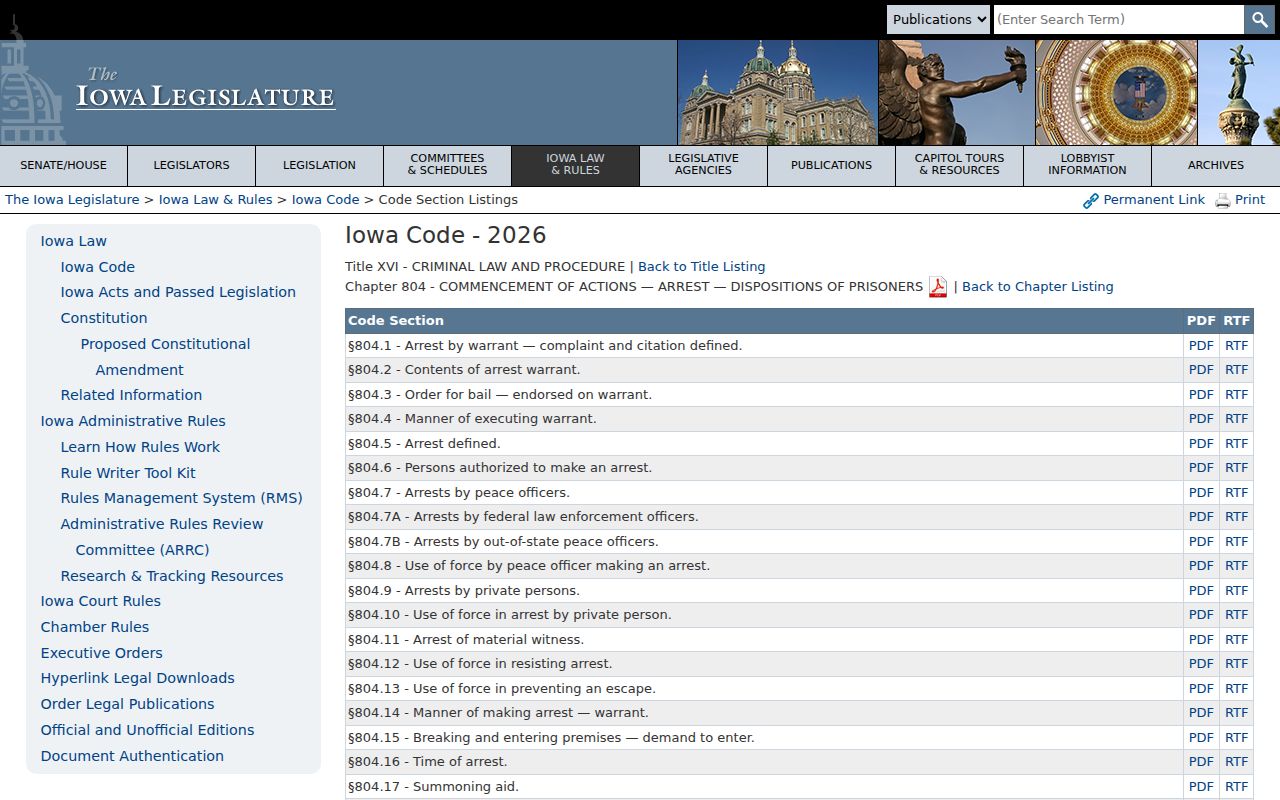
Filings used to obtain a Marion County arrest warrant are not always public before the arrest. Iowa Code section 804.29 holds them back. Confidentiality lasts until the statutory arrest and return, or the initial appearance, subject to official-duty exceptions. That explains a thin search result. It also explains why staff cannot release certain details at some stages.
Access rule: Public access does not require release of sealed warrant material, protected juvenile records, or confidential investigative facts.
Iowa Code Chapter 22 lets anyone request existing nonconfidential records. It cannot force a warrant list by person. A focused request names the agency, the case number if known, the record type, the date range, and the fields sought. For a Marion County district-court docket or certified document, the Clerk remains the direct source.
How Marion County Arrest Warrants Are Served
The court issues a Marion County arrest warrant, and law enforcement carries it out. The Marion County Sheriff's Office handles service across the county and its unincorporated areas, with dispatch routing questions at 641-828-2220. Pella, Knoxville, and Pleasantville police may serve or route matters within their own authority. Smaller communities under sheriff coverage rely on county routing. After an arrest come booking, an initial appearance, and bond, following the court and custody process. The officer's return records what happened. The sheriff's recent-arrest and jail tools show custody information, not every unserved warrant, and the county runs no constable service or city-marshal roster. Federal warrants belong to the Southern District of Iowa and federal agencies. Note: Call before visiting the Law Enforcement Center, since no warrant-specific surrender desk or guaranteed walk-in hours are published.
Confirm a Marion County Arrest Warrant
The official case and citation form shows the identifier route without a private-person query.
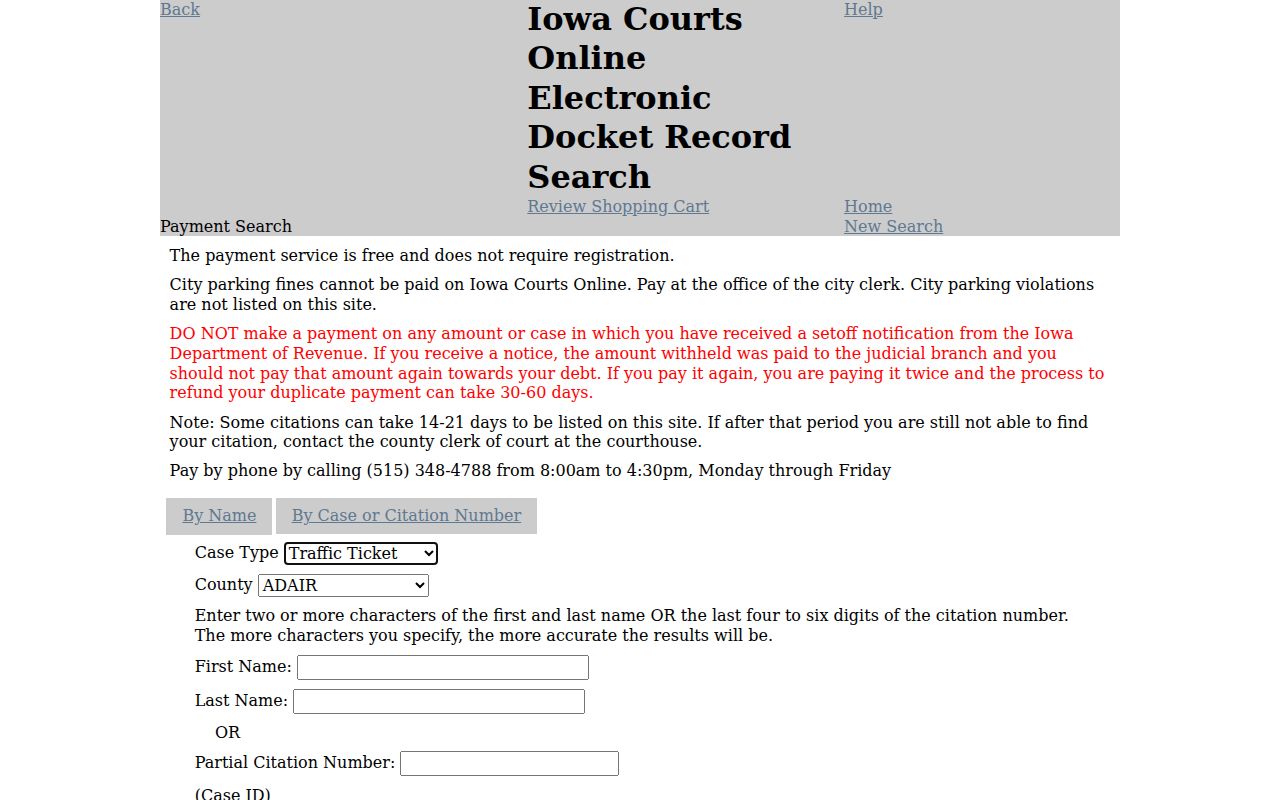
Marion County publishes no official public arrest-warrant list. Iowa Courts Online is the case-discovery tool. The Clerk and the sheriff form the confirmation chain from there. Keep private identifiers off commercial sites and screenshots.
- Gather the notice, case or citation number, approximate date, and county.
- Search Iowa Courts Online by case number when possible, or by name with Marion County and the closest case type.
- Compare county, filing date, case type, party, and docket events. Do not treat a namesake as a match.
- Call the Clerk at 641-828-2207 and ask if the entry is active, served, recalled, quashed, or replaced.
- For service, custody, or safe surrender routing, call sheriff dispatch at 641-828-2220 before going in person.
An online miss in Marion County does not prove that no warrant exists.
Arrest Warrant vs Summons vs Bench Warrant
Many Marion County court papers look urgent. They do different jobs, so read the docket label to see whether the court ordered an arrest or set an appearance.
| Feature | Arrest warrant | Summons | Bench warrant |
|---|---|---|---|
| Purpose | Authorizes arrest | Directs appearance | Arrest after missed duty |
| Basis | Probable cause or charging process | Charge without immediate custody | Failure to appear or comply |
| Issuer | Judge or magistrate | Court or authorized process | Judge or magistrate |
| Response | Clerk, counsel, surrender plan | Appear as directed | Confirm required court action |
Iowa may label a nonappearance order an arrest warrant for failure to appear rather than use one statewide bench-warrant term. Marion County has no public capias-pro-fine portal.
Marion County Arrest Warrant Bond
Bond is a release condition, nothing more. The Iowa Judicial Branch publishes a uniform schedule covering certain arrests made when court is not in session. Some Marion County cases still need a judicial officer, and discretion can move a scheduled amount either way. So a chart can never quote the bond on a specific Marion County arrest warrant. For the real number, the Clerk can point you to the right court entries. The jail at 641-828-2245, or another authorized office, can walk you through procedure once custody is in play. Ask about the amount, what payment instrument the office takes, the receipt, release conditions, and your next date. County sources publish no universal online bond portal, no bondsman list, and no bond-window schedule. Posting bond solves custody or a hold, but it does not finish the underlying charge. Cash, surety, and personal-recognizance release are three different things. Never assume one is on the table until the court or the custody office confirms it.
Marion County Warrant Record Boundaries
No single sheriff dashboard answers every court question. The Clerk keeps the district-court record. The sheriff handles service and custody. City police hold their own agency records, and each source can show a different slice of the same Marion County arrest-warrant process. The "Who's in Jail?" roster reports recent arrests and custody, not warrants. Iowa DPS's IOWA System holds justice data for agencies, but it offers no public self-service search, so confirmation from the Clerk stays essential. A federal case belongs with PACER, the Southern District clerk, your counsel, or the responsible federal agency. Iowa Courts Online does not search federal warrants.
What to Do If There's a Warrant for You
Act only on verified information. Identify the issuing court and the case number. Then ask the Clerk what the current entry requires and whether counsel may seek a court date, a recall, a quash, or an arranged appearance. A recall withdraws a warrant. A quash sets it aside. Neither one means an online payment automatically closed the matter. If surrender is required, an Iowa attorney can help you work out timing, bond, and the next appearance. Call sheriff dispatch before you travel, since general office hours are published but Marion County offers no warrant walk-in plan. Ask the court or jail which payment methods it accepts. Keep your receipt and release conditions, then confirm your status and next date. Paying a fine, posting bond, and resolving the charge are three separate steps in Marion County.
Important: Do not ignore a confirmed warrant or rely on a private locator; contact counsel, the Clerk, and sheriff routing promptly.
Marion County offers no amnesty event, guaranteed walk-through, or public recall form; the court controls every remedy.